WORKING PARENTS at breaking point
How can we use design thinking to having a meaningful impact?
the CLIENT: UX charity project within Fierce Design Agency, involving our Slack and Linkedin communities.
Project goal: How can we use Design Thinking to better understand the problems working parents face and explore how we could have a meaningful impact?
Read the case study in full on my Medium page
DURATION: 2 months
TEAM: Part of a team of 3 UX Designers
MY ROLE: I conducted each phase myself with help from others at Fierce. We followed the design thinking process until the test phase where the project was paused.
TOOLS & SOFTWARE: Miro, Google meet, Figma, Slack, WIX, Google slides
PROCESS
UNDERSTAND & EMPATHISE
What exactly is the ‘broken system’ that working parents are stuck in and in what ways is this affecting them?
Interviewed 13 working parents and 3 HR representatives.
Aim: Understanding their current behaviours, goals, pain points, constraints, and learn more about the system around them. I ensured the participation of individuals of diverse backgrounds, including both men and women across various age groups and professional industries.
Key discovery insights:
-
The high cost and sourcing of suitable childcare can be crippling
-
The sense of loneliness and loss of confidence & identity is often overwhelming during parental leave
-
Real flexibility and understanding are the most valued qualities in a employer
-
Balancing childcare and work is a huge challenge and many parents feel guilty about how much time they give to work and parenting
-
Lack of awareness of the organisations and resources that are available
-
For businesses it is key to ensure a family friendly policy is integrated into day to day culture, considering how it is enforced, perceived, etc.
Previously assuming that the high cost of child care was the primary barrier preventing return to the workplace, we discovered that in fact this constituted just one piece of a large and complex puzzle.
defining the problem
Making sense of the vast amount of data gathered
Icreated two affinity maps, one for working parents and one for HR representatives. Turing the quotes into ‘I’ statements to gather the needs, extracting 9 key needs for working parents.
Experience blueprint: From planning a baby to returning to work, juggling parental and professional responsibilities. This detailed user journey included the key needs, identified pain points and opportunities and 3 behavioural segments: Work focused, Family focused and Self focused.
Conducted a How Might We (HMW) exercise to determine the key HMW statement which will have the maximum amount of impact and that we will focus on in the ideation phase: 'How might we empower parents to more confidently return to and remain in work?'

IDEATe solutions
With a clear problem statement decided, we were ready for an ideation workshop
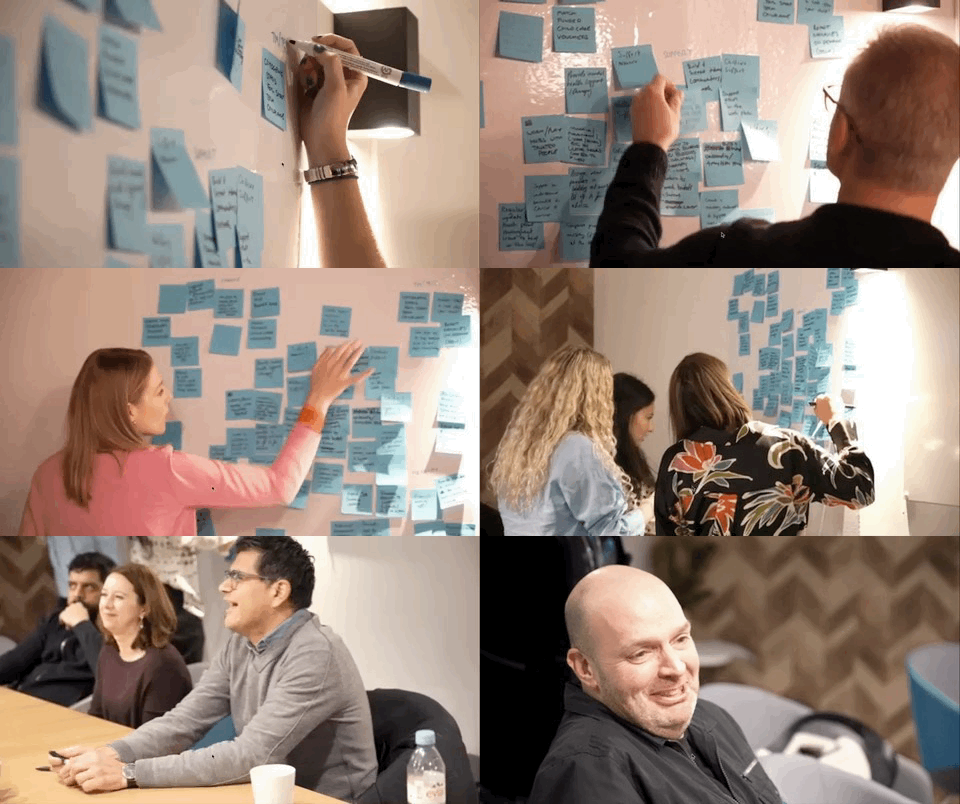
Organised and facilitated a ideation workshop. Using the user journey map, I presented the discovery findings, built empathy for the user, and explained how we arrived at our problem statement, helping ensure our solution met the real user’s needs.
1. We ideated around our problem statement then grouped the ideas unveiling six prominent themes. After mapping these themes on an effort value scale we dot voted and the theme of Awareness was chosen to move forward with.
2. Dividing into 3 groups, we mapping the “Who, What, Why, and How” of potential solutions within the theme of Awareness.
The solution: A Single Source
The chosen idea was to create a platform that collates resources for parents and businesses to improve awareness and solve the current problem of many not knowing that the information and support is out there.
This would solve the user need of needing support through their journey and the business value would be retained teams, improved culture and increased diversity.


Develop
With the limited time and resource, we built an Minimum Viable Product of our solution
Creating a site on WIX, I collated all the resources I could find that would help working parents and HR representatives, writing a short blog post for each resource.
User flow
Recognising that parents often face time constraints, our goal was to deliver a platform that offered targeted, pertinent resources without burdening them with an overwhelming abundance of options. We devised a user-friendly wizard that would guide parents or HR representitves through, presenting them with precisely the resources that best suited their needs.
We included a short feedback form which allowed us to test appetite and desirability but we also planned a focus group to gather more in depth feedback.

conclusion
Conducting a thorough discovery phase, define phase and productive ideation workshop relevaled the need for an increased awareness of the resources and information that is out there. Facilitating the easy sourcing of this support will help busy working parents and inform businesses.
We created an easy to use website that collates these resources and guides the user to the information right for them based on the stage of the journey they're at.
Next Steps...
The project was put on pause but given more time these are the steps I would take:
-
Conduct a focus group to gain some more in depth feedback on the MVP site.
-
Research other sites which collate resources and consider the flow and features they include.
-
Assess and review other digital platforms used by working parents.
-
Design and create a prototype website using Figma including running user interface tests and develop with the use of the Maze tool to inform new iterations.
reflections
This project was a great personal learning experience, particularly taking on a lead role in responsibility for arranging and conducting the interviews. I honed in my ability to ask provoking but not leading questions and became accustomed to adapting the questions and steering the conversation as needed.
Opting for an in-person session over the initially planned virtual workshop proved to be both a highly rewarding and invaluable learning experience.
Key learnings:
-
Painting a picture: I could see clearly the great value in creating a detailed user journey for keeping the user front and centre and the impact it can have on the direction the project takes.
-
The power of collaboration: I was reminded of how much you can achieve in such a short amount of time during a well planned workshop.
-
Trust the process: Don't be intimidated by starting a project with no preconceived ideas in mind of what the outcome may be, that's the beauty of the design thinking process.


